
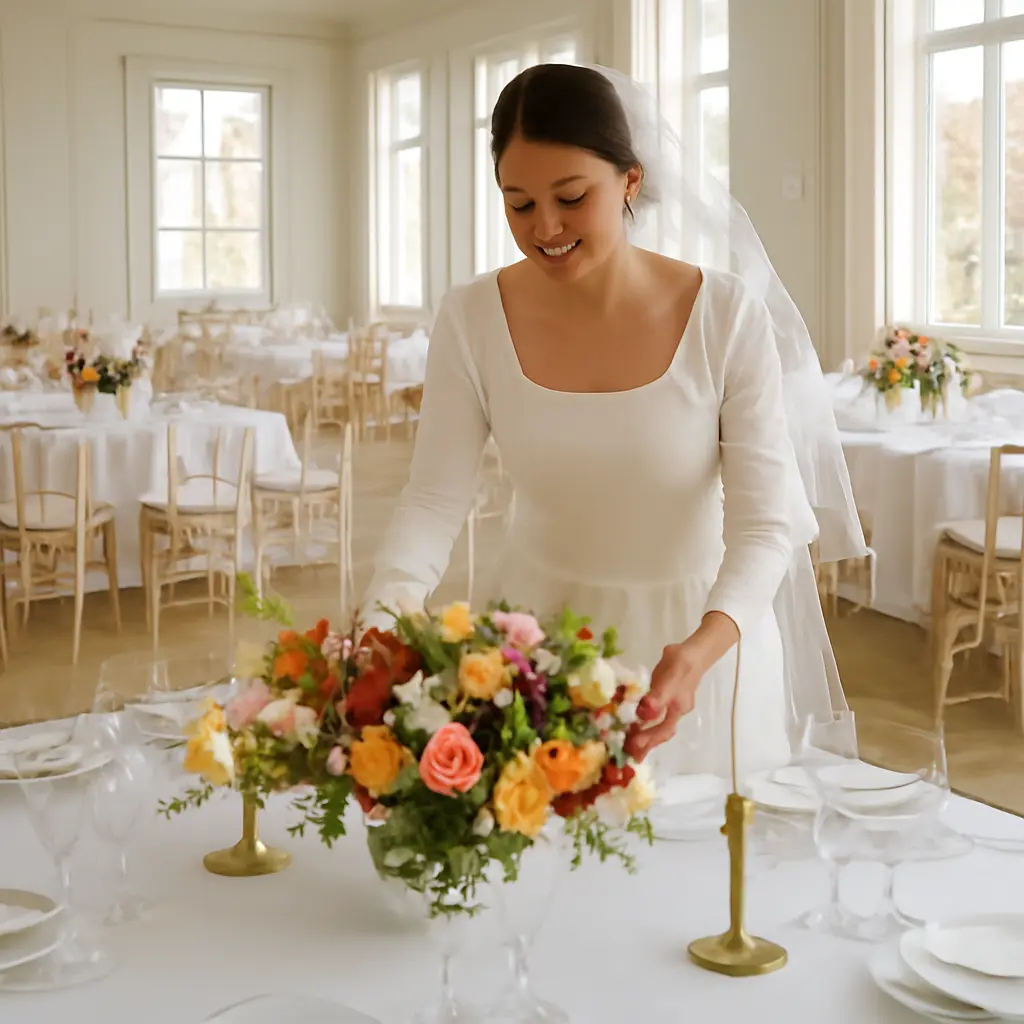
Tablescape gambles are deliberate choices that depart from familiar wedding-table conventions—think dramatic color, unexpected objects, or arrangements that put guests’ comfort to the test. Brides who take these risks often find that one distinctive detail can give a reception a stronger sense of personality, provided the design still works for dining and conversation. Here are the boldest bets real brides have shared, what paid off, what needed adjusting, and how to make an ambitious tablescape practical.
What makes a wedding tablescape gamble work?
A wedding tablescape is the coordinated arrangement of items on and around a dining table, including linens, dinnerware, glassware, flowers, candles, and place cards. The term is used broadly by wedding planners and décor professionals; it does not have a single formal industry definition. A tablescape gamble is a more specific design decision: a bride chooses a visually or logistically unconventional element and accepts that it may be a hit-or-miss choice.
The strongest gambles balance visual impact with usability. A towering centerpiece may look impressive in photographs but block sightlines; unusual place settings can feel personal but slow down service. The Knot’s 2024 Real Weddings Study reported that the average U.S. wedding cost was $33,000, with décor and flowers among the many competing budget priorities. That makes testing a high-impact idea before committing especially valuable.
Color and contrast
Color gambles replace the expected neutral palette with a deliberate, saturated combination: jewel-toned linens, contrasting napkins, or a single vivid accent against otherwise restrained tableware. One bride described choosing deep blue cloths with bright citrus-colored flowers rather than the soft, all-white look she had initially considered. In person, the contrast made the tables feel lively; in photographs, it gave each place setting definition.
To keep bold color from becoming visual clutter, repeat a small palette across the room. Choose one dominant shade, one supporting color, and a limited accent. Ask the venue or photographer to review a sample under the reception lighting, since warm bulbs and daylight can change how colors appear.
Unexpected objects and personal details
An object-led tablescape uses meaningful or unconventional items in place of standard décor. Brides have described using family heirlooms, vintage books, fruit, handmade ceramics, or small objects tied to a shared hobby. One couple used secondhand brass candlesticks collected from different markets; the mismatched pieces became conversation starters and made the tables feel gathered over time rather than ordered as a package.
The practical test is whether the object can safely share a dining surface. Keep food-contact areas clean, avoid fragile pieces where servers need to work, and confirm that candles meet the venue’s fire rules. Personal objects are most effective when they have a clear story and do not crowd out plates, glasses, or guests’ belongings.
How bold centerpiece choices change the guest experience
Centerpieces are the focal arrangements on a dining table, typically made from flowers, greenery, candles, sculptural objects, or combinations of these. Their height, footprint, and placement influence not only the room’s appearance but also how easily guests see and speak to one another. That is why brides’ centerpiece gambles often produce the clearest lessons: a dramatic design needs to succeed from every seat, not just in a styled photograph.
Tall arrangements versus low, sprawling designs
Tall arrangements create vertical drama and can make a large room feel more finished. One bride said her florist’s raised arrangements transformed a plain reception hall, but guests found that the designs blocked conversation when they sat directly at eye level. The compromise was to raise the flowers higher and use a narrower base, preserving the room-scale effect while opening sightlines underneath.
Low arrangements take the opposite gamble: they spread across the table, creating a lush, intimate look. They can be easier to talk over, but sprawling foliage or vessels may compete with plates and serving dishes. Before approving a centerpiece, test it at a fully set table with seated guests, including the largest plates and any shared food service.
Fruit, branches, and seasonal materials
Using edible or natural materials as décor can make a tablescape feel abundant and connected to its season. Brides have chosen bowls of citrus, clusters of pears, pomegranates, leafy branches, or locally sourced flowers. One bride’s lemons and greenery looked vivid and informal, but she learned that cut fruit can dry out and that fragrant ingredients may compete with the meal.
Ask the florist and caterer to coordinate on perishability, food handling, and setup timing. The U.S. Department of Agriculture’s general food-safety guidance emphasizes keeping perishable foods out of the temperature danger zone; edible décor should therefore be handled and displayed according to the caterer’s food-safety plan, rather than treated as ordinary prop styling.
What real brides learned from unconventional place settings
A place setting is the individual arrangement of tableware and personal details assigned to each guest. It may include a charger, dinner plate, cutlery, glassware, napkin, menu, and place card. Because each setting is repeated across the guest list, small design choices can create a strong overall impression—and magnify any cost, setup, or accessibility problem.
Mixed china and mismatched glassware
Mismatched china combines plates or cups that differ in pattern, color, or era while sharing a unifying feature. A bride who sourced vintage plates said the variety made the tables feel collected and personal; the gamble was that not every setting looked identical. Her solution was to repeat a consistent napkin color and keep the glassware simple, giving the mix a visual anchor.
Before choosing rental or vintage pieces, confirm quantities, replacement policies, and whether the caterer can serve efficiently with the selected shapes and sizes. A striking plate is not a success if it is too small for the menu or difficult to stack and clear.
Personalized menus, favors, and place cards
Personalized paper goods turn a place setting into a welcome message. Some brides have used handwritten notes, illustrated menus, or favors that double as name cards. These details can make guests feel considered, but they add production and setup work. One bride said individually written notes were a favorite keepsake; she also needed several helpers to sort and place them correctly before guests arrived.
Build a seating-chart export and a labeled setup plan, and have a second person check the finished tables. If guests have allergies, dietary restrictions, or accessibility needs, make sure the personal detail does not replace clear meal identification or readable information.
How to test a tablescape gamble before the wedding
A mock-up is a full or partial test arrangement made before the event. It lets couples evaluate the design in real conditions rather than relying only on inspiration images. Wedding planners commonly recommend sampling key elements, especially when a choice affects table dimensions, rentals, lighting, or service.
Stage a sample table
Set one table with the actual linen, plate, glass, centerpiece, menu, and candle type. Sit in the chairs, check sightlines, and make sure guests can reach their drinks and food. Photograph the sample in the venue or under similar lighting, then review it both up close and from across the room.
Check budget, safety, and setup time
A dramatic design can carry hidden costs: delivery, installation, rentals, labor, repairs, and teardown. Ask vendors to itemize these rather than comparing only the visible object or flower price. Confirm venue rules for open flames, hanging elements, food displays, and anything that could obstruct exits or accessible routes.
Use this quick checklist before approving a bold idea:
- Can guests see and speak to one another across the table?
- Is there enough room for plates, drinks, and serving staff?
- Does the material remain safe and attractive throughout the reception?
- Are rentals, labor, transport, and cleanup included in the budget?
- Does the design reflect the couple rather than simply follow a trend?
Conclusion: make the gamble personal, not impractical
Real brides’ boldest tablescape gambles show that color, meaningful objects, dramatic centerpieces, seasonal materials, and unconventional place settings can make a reception memorable. Their results also underline a consistent rule: the best design choices support the meal and the guests as well as the photographs. Test the look at a real table, verify safety and service needs with vendors, and spend on the details that carry the most meaning. Couples planning their own reception can begin by selecting one daring element, then building a simple, comfortable setting around it.
Sources: The Knot, “The Knot Real Weddings Study,” 2024, https://www.theknot.com/content/average-wedding-cost; U.S. Department of Agriculture, “Food Safety and Inspection Service: Food Safety Basics,” https://www.fsis.usda.gov/food-safety/safe-food-handling-and-preparation/food-safety-basics


