
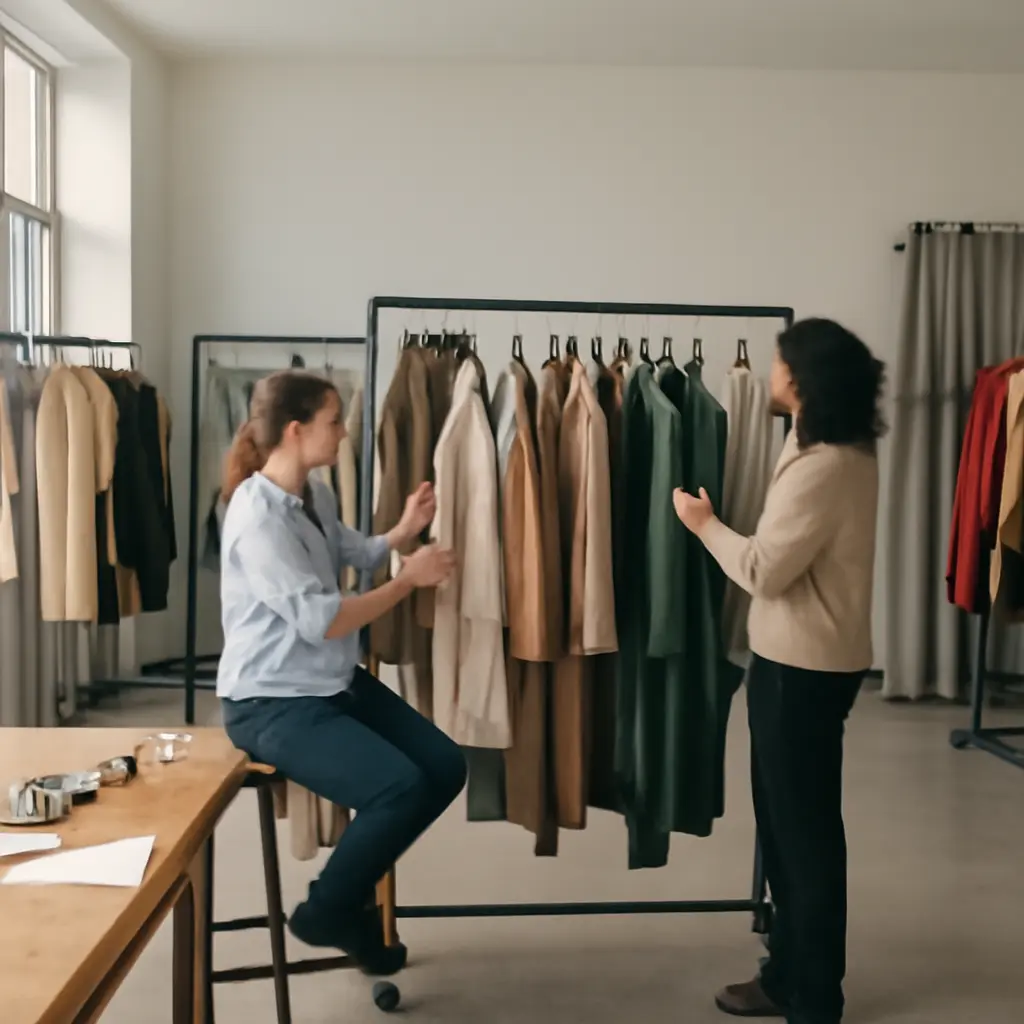
A wardrobe direction call is the decision-making conversation that turns a production’s story, character, budget, and practical needs into a clear clothing plan. It is not simply a choice of attractive outfits: the team weighs script and brand requirements, character and visual references, continuity, availability, cost, and on-camera performance before approving a direction. The process matters because wardrobe choices shape how audiences read a character and must also be achievable under real production conditions. The sections below explain who makes the call, what evidence informs it, how alternatives are tested, and how a decision is translated into a documented plan.
Wardrobe direction calls balance creative intent with production constraints
A wardrobe direction call is a structured decision about the clothing and accessories a character or on-screen subject should wear, including the visual logic behind those choices. There is no single industry-wide formula or universal statistic for how long such a call takes: the process varies by format, budget, schedule, and the number of decision-makers. In practice, it is a collaboration among the costume designer or stylist, director or creative lead, production team, and—depending on the project—actors, producers, clients, or brand representatives.
The call usually resolves several connected questions: What does the story require? What should the audience infer from the look? Can the garments be sourced, fitted, maintained, and repeated? Will they work under the camera, lighting, movement, and location conditions? A useful decision is therefore both expressive and executable.
Creative direction establishes what the clothes need to communicate
Creative direction is the intended visual meaning of the wardrobe: character, period, social position, mood, transformation, or relationship to the world of the production. Costume designer Deborah Nadoolman Landis, in her book Costume Design, describes costume as a means of helping tell the story and defining character. That principle explains why a direction call should begin with the script, brief, or campaign concept rather than with isolated shopping choices.
Teams commonly use script breakdowns, reference images, color palettes, character notes, and scene context to make that intention concrete. These materials are guides, not proof that a particular garment will work: final choices still need to be checked against the performer, camera, schedule, and production requirements.
Production feasibility narrows the options without erasing the idea
Production feasibility means that the proposed wardrobe can be acquired or made, fitted in time, afforded, maintained, and used safely. The U.S. Bureau of Labor Statistics lists costume designers among the occupations responsible for designing clothing and accessories for stage, television, and film productions; the work sits within a broader production system that includes purchasing, construction, fitting, and coordination.
A visually precise idea may need adjustment if a garment is unavailable in the performer’s size, cannot be duplicated for multiple takes, conflicts with movement, or exceeds the approved budget. The call is not necessarily a compromise between art and logistics: often, the strongest direction is the one that preserves the story’s intent while anticipating these constraints early.
Wardrobe direction calls follow a repeatable evidence-to-approval process
Although individual productions differ, a typical call moves from brief and research to options, evaluation, approval, and documentation. The sequence helps participants distinguish between a preference and a reasoned recommendation. It also makes it easier to identify what still needs testing before a final commitment.
Briefing and research define the decision criteria
The briefing stage identifies the subject, scenes, intended audience, visual references, budget parameters, schedule, and any restrictions. For scripted work, a costume breakdown connects clothing to scenes and character developments. For advertising or editorial work, the brief may also specify brand standards, product visibility, or campaign messaging.
Research can include period references, occupational details, cultural context, and consultation where a look represents a particular community or lived experience. The point is not to make every visual choice literal. It is to spot assumptions and decide which details are essential to the story, which are flexible, and which need expert input.
Options are compared against story, camera, and practical needs
A fitting or presentation turns abstract proposals into options that can be assessed on the person who will wear them. Teams may compare silhouette, color, texture, fit, comfort, movement, and how the clothing reads in the intended setting. A phone-camera preview or fitting photograph can help, but it does not replace a test under the production’s actual camera, lighting, and framing conditions.
The Society of Motion Picture and Television Engineers publishes technical standards for motion-imaging systems, illustrating why wardrobe must be considered in relation to image capture rather than only in person. Fine patterns, reflective surfaces, and high-contrast details can behave differently on camera than they do to the eye. Where the risk matters, a camera test is more informative than confident guesswork.
Approval turns a preferred look into an actionable plan
Approval means that the relevant decision-makers accept a direction or select an option, while noting any outstanding conditions. A useful record identifies the approved look, scene or shoot use, required alterations, sourcing status, backup choices, and who owns the next action. This reduces the chance that a later handoff will reopen a decision because its rationale was never recorded.
For multi-scene productions, the approved direction also needs continuity information: what changes, what stays consistent, and what must be reset between takes. The Costume Designers Guild represents costume designers and related professionals in film, television, and other media, reflecting the specialized collaborative work behind such decisions. Its professional context reinforces that wardrobe is a production discipline, not merely a last-minute styling layer.
Wardrobe direction calls differ by production type and decision-maker
The same core questions apply across productions, but the emphasis changes with the format. A scripted drama may prioritize character arc and continuity; a commercial may foreground brand recognition and product presentation; a live event may put greater weight on movement, durability, and quick changes. These are related forms of wardrobe direction, not interchangeable workflows.
Film and television calls prioritize character and continuity
In film and television, the direction often maps clothing to the story’s timeline. A costume may signal a character’s status, emotional shift, or changing circumstances, while repeated scenes demand control over wear, accessories, and garment condition. The designer’s proposal is typically coordinated with the director and production design so that costume contributes to a coherent visual world.
A practical example is a character whose clothing becomes progressively less formal. The call must establish whether the shift is deliberate storytelling, an unplanned continuity break, or a result of scene order. A scene-by-scene wardrobe record helps the team preserve the intended progression even when filming happens out of sequence.
Commercial and editorial calls prioritize brief alignment and image clarity
In commercial and editorial work, a wardrobe direction call often translates a short brief into a recognizable visual concept. The team may need to balance a subject’s character or individuality with product requirements, client preferences, and the composition of the image. The best choice is not automatically the most fashionable one; it is the option that serves the agreed message and remains legible in the final frame.
For example, a campaign featuring a dark product against a dark outfit may weaken visual separation. A wardrobe test can reveal whether a different color, material, or silhouette improves product visibility without changing the campaign’s overall tone.
Live and performance calls prioritize movement, safety, and rapid changes
For live performance, dance, and event work, the wardrobe decision must account for choreography, fast changes, heat, durability, and the performer’s ability to move safely. A look that photographs well while standing still may be unsuitable once tested in motion. This is why practical rehearsal or movement checks are part of validating the direction.
The same logic applies to any production involving physical action: check closures, footwear, visibility, and whether a costume can withstand repeated use. The decision should be made with the people responsible for wearing and maintaining the clothes, not solely from a mood board.
Wardrobe direction calls become stronger when evidence and collaboration are explicit
A reliable call separates the intended effect from the garment chosen to achieve it. That distinction keeps teams open to alternatives: if a specific jacket is unavailable, the group can preserve the character’s intended silhouette or status through another option. It also makes disagreements easier to resolve because participants can return to shared criteria instead of relying only on taste.
- State the story or campaign purpose of the look.
- Identify non-negotiable requirements, such as product visibility, period accuracy, or continuity.
- Show practical alternatives and note their cost, availability, and fitting needs.
- Test uncertain choices in the conditions that matter, especially camera, lighting, and movement.
- Record the decision, rationale, approvals, and remaining actions.
A simple comparison chart can make the call clearer: list each option in rows and assess it against story fit, camera readability, comfort, continuity, availability, and cost. The chart does not replace creative judgment; it makes the trade-offs visible so the team can make that judgment deliberately.
Conclusion: Wardrobe direction calls connect visual storytelling to execution
A wardrobe direction call is the collaborative process of deciding what clothing should communicate and confirming that the decision can work in production. Creative direction supplies the meaning; research and testing validate the options; production constraints shape what is achievable; and approval records turn the choice into a usable plan. The emphasis shifts across film, advertising, editorial, and live performance, but each benefits from clear criteria and communication.
For a stronger call, begin with the story or brief, present alternatives, test the risks that matter, and document the final direction. Readers who want to explore the craft further can consult costume-design references, professional guild resources, and occupational information from the U.S. Bureau of Labor Statistics.
Sources: Deborah Nadoolman Landis, Costume Design, 2012, https://www.laurenceking.com/products/costume-design; U.S. Bureau of Labor Statistics, Fashion Designers, https://www.bls.gov/ooh/arts-and-design/fashion-designers.htm; Society of Motion Picture and Television Engineers, Standards, https://www.smpte.org/standards; Costume Designers Guild, About the Guild, https://costumedesignersguild.com/about/


