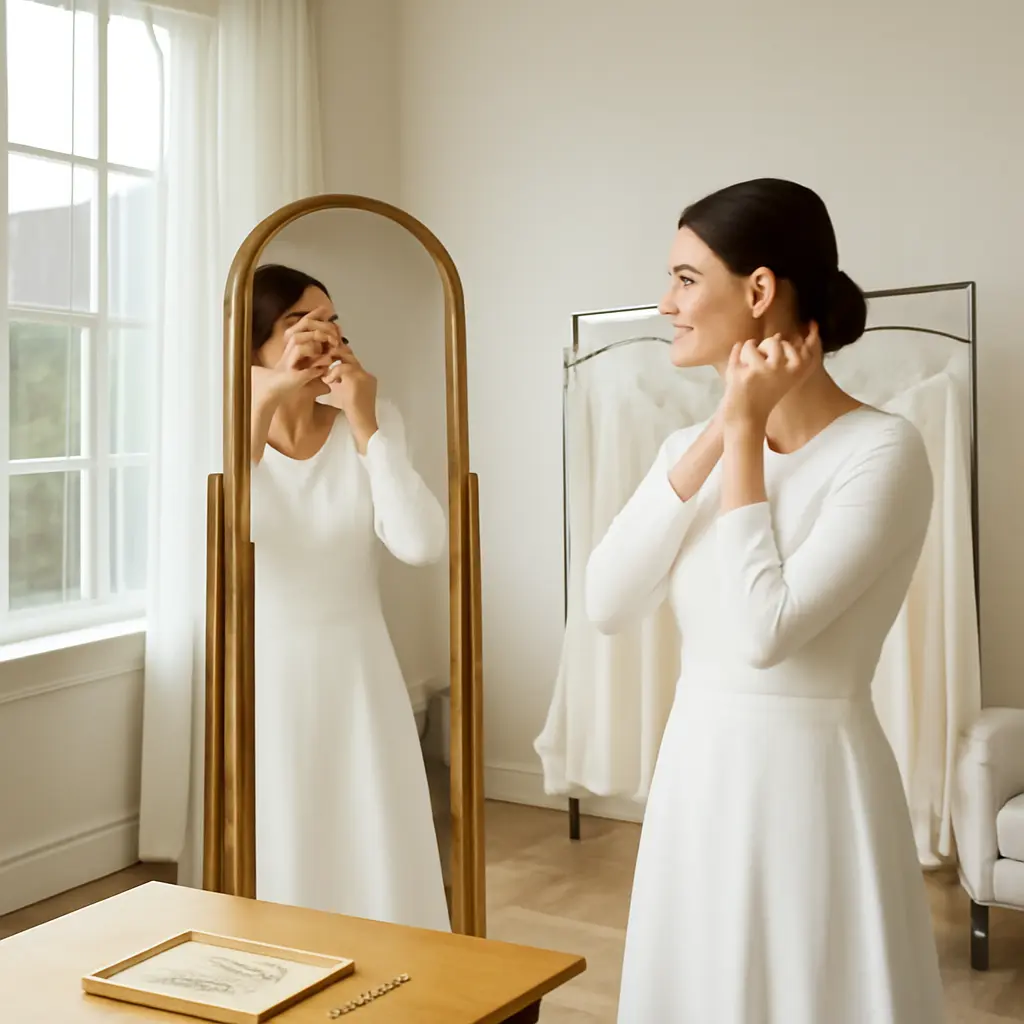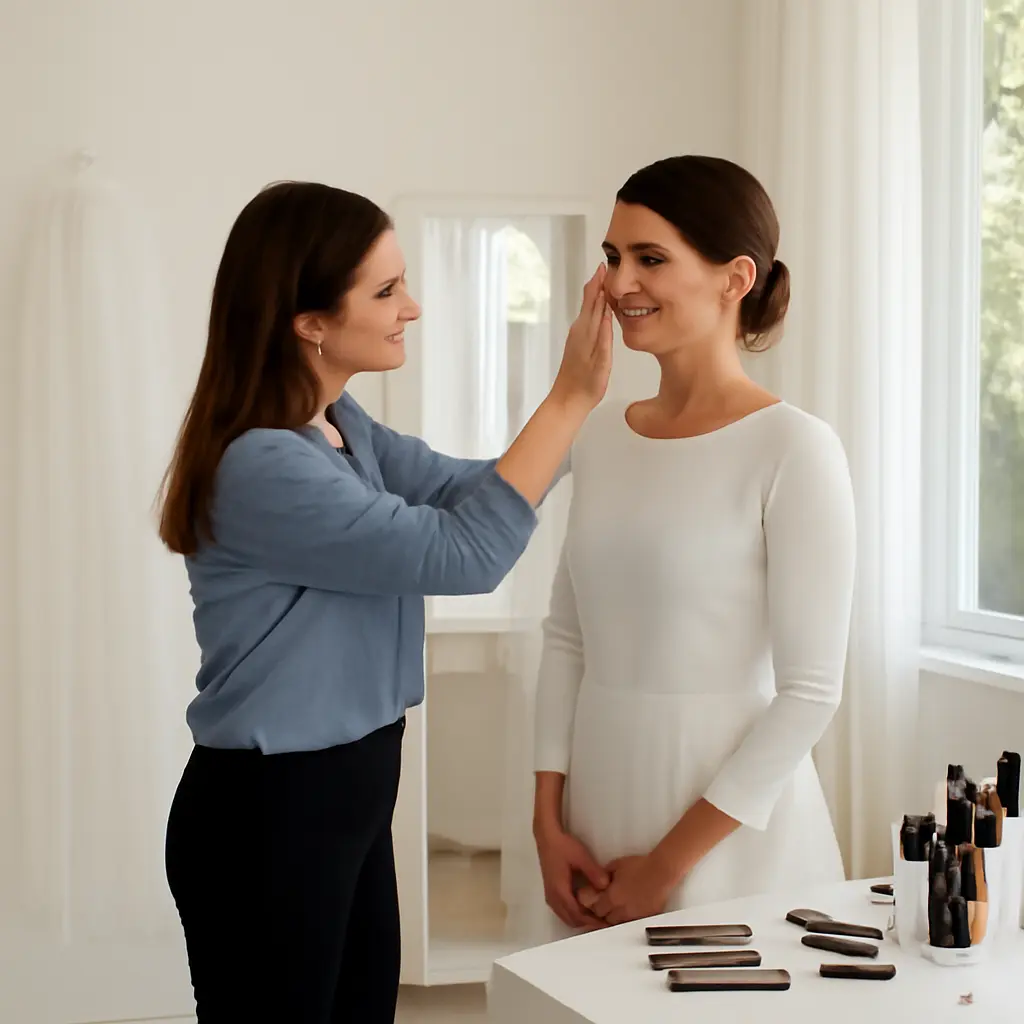
Bridal hair and makeup are the finishing details that frame a bride’s face and complete her look; getting them right means choosing a style that works with the gown rather than competing with it. The most reliable approach is to consider the dress’s silhouette, neckline, fabric, and embellishment alongside the wedding setting, personal comfort, and how the look photographs. A professional trial, a realistic schedule, and products tested for wear can help translate those choices into a polished result. The details matter: The Knot’s 2024 Real Weddings Study found that couples spent an average of $2,900 on beauty services, reflecting how much attention wedding-day styling receives.
Bridal Styling Balances Hair and Makeup With the Gown
Bridal styling is the coordinated selection of hair, makeup, and accessories to complement a bride’s clothing, features, preferences, and event conditions. It is not a rule that a simple gown requires dramatic beauty or that an ornate gown requires minimal makeup. Instead, it is a process of balancing visual weight: the gown remains the focal point, while hair and makeup clarify the overall look and help the bride feel like herself.
The American Academy of Dermatology recommends testing makeup products before use, particularly for people with sensitive skin. That practical advice also supports the broader case for a bridal trial: testing reveals how products feel and wear, and whether the complete look works with the dress, lighting, and accessories. The main considerations are the gown’s design, the desired level of makeup, hair shape and hold, and preparation for the day’s conditions.
Gown Design Sets the Visual Direction
Neckline, fabric, embellishment, and silhouette provide useful clues for styling. A high neckline may pair naturally with an updo that reveals its shape; a strapless or open neckline leaves more room for loose hair, though an updo can still create an elegant contrast. Lace, beading, and other intricate details can become crowded if hair accessories and makeup are equally elaborate, while a clean-lined gown can accommodate a bolder beauty feature if that suits the bride.
These are visual guides, not fixed formulas. A bride should try the dress with candidate hairstyles and veil placements, then check the result from the front, side, and back. This also helps confirm that the hairstyle does not hide a distinctive neckline or interfere with the veil.
Personal Style Keeps the Look Authentic
A bridal look is most convincing when it resembles the wearer at her most considered, not a version of someone else. A person who rarely wears foundation may prefer light, buildable coverage; someone who regularly wears a defined lip may feel more comfortable keeping that signature detail. Bring reference photos that show the desired mood, but discuss what is practical for the bride’s own hair texture, skin, and comfort.
A useful test is whether the bride recognizes herself in trial photographs. If the look feels unfamiliar, adjust one element at a time—such as lash intensity, lip color, or hair volume—rather than changing everything at once.
Hair Choices Complement the Gown’s Shape and Setting
Bridal hair design includes the hairstyle, finish, accessories, and method of securing the look. Common options include updos, half-up styles, and worn-down hair. Each can complement a gown; the best choice depends on the dress, hair length and texture, weather, veil, and the bride’s preference. A trial allows the stylist to check both the appearance and the practical hold.
Updos Highlight Necklines and Accessories
An updo gathers some or all of the hair away from the face and neck. It can bring attention to a high neckline, statement earrings, or a detailed back, and can make veil placement easier to assess. Updos range from sleek chignons to textured buns and pinned curls. The stylist should test the veil’s position and removal so that taking it off does not undo the style.
Half-Up and Down Styles Add Movement
Half-up hair secures part of the hair while leaving the rest loose; a down style keeps the hair free around the shoulders. Both offer movement and can soften a structured gown. Their practical success depends on texture, preparation, and conditions: humidity, wind, heat, and long periods of dancing may change the shape. Ask the stylist how the look can be refreshed and whether a small touch-up kit is appropriate.
Accessories and Veils Complete the Hairstyle
Veils, combs, pins, and headpieces should be considered part of the hairstyle rather than added at the last minute. Bring them to the trial, along with any hair extensions or accessories planned for the wedding. This lets the stylist test placement, balance, and security. A delicate accessory can add definition without distracting from a detailed gown; a larger statement piece may work best when the remaining hair ornaments are restrained.
Makeup Complements Skin, Photography, and Wear Time
Bridal makeup is the planned use of complexion products, color, and definition to suit the bride’s features and desired level of polish. It should be evaluated in natural light and in photographs, not just under the lights at a salon. Makeup can be subtle or more defined, but its finish, color, and longevity should work with the gown and the day’s schedule.
Complexion Preparation Supports a Natural Finish
Skin preparation means using familiar, suitable skincare before makeup rather than introducing a new routine immediately before the wedding. The American Academy of Dermatology advises testing products before use because cosmetics and skincare ingredients can cause reactions in some people. Brides with known sensitivities can discuss ingredients with their makeup artist and, when needed, a dermatologist. Avoiding last-minute experiments reduces the chance of irritation disrupting the planned look.
Color and Definition Should Work Together
Eye, cheek, and lip choices create the makeup’s visual emphasis. A softly defined eye can pair with a stronger lip, or a more defined eye can be balanced with a quieter lip. These are options rather than prescriptions; skin tone, personal taste, cultural traditions, and the gown’s color all matter. Ask to see the trial in daylight and take photographs from a few distances to check that the makeup reads well without looking heavy in person.
Longevity Depends on Testing and Touch-Up Planning
Long-wear makeup is makeup selected and applied with the length and conditions of the event in mind. A trial can reveal whether products feel comfortable and how they appear after several hours. Discuss expected heat, humidity, tears, and dancing with the artist, and ask which simple touch-ups are useful. Blotting papers, lipstick, or a small powder may be enough; the goal is to maintain comfort and appearance without repeatedly rebuilding the makeup.
A Bridal Trial Turns Ideas Into a Coordinated Plan
A bridal trial is a preview appointment in which the bride and beauty professionals test and refine hair and makeup before the event. It connects inspiration to practical decisions: which hairstyle works with the neckline, whether the veil stays secure, how makeup looks in photographs, and how long the appointment requires. Schedule it early enough to allow adjustments, and bring gown details, accessories, reference images, and notes about preferences or sensitivities.
Use Photographs to Check the Complete Look
Photographs help compare the trial from different angles and under different lighting. Take images in daylight if possible, then review them alongside the gown or a clear picture of it. Notice whether the hair obscures a detail, whether the makeup appears balanced, and whether the overall result still feels personal. Where available, a chart or photo board comparing the front, side, and back views can make these decisions easier to discuss with the stylist.
Build a Realistic Wedding-Day Schedule
A beauty schedule should account for the bride’s services, any additional people receiving hair or makeup, travel, dressing, and photography. Ask the artist to estimate service times and confirm when the bride needs to be ready. A written timeline reduces rushed changes and helps ensure that hair and makeup are finished before the gown is put on, unless the dress or makeup artist requires a different sequence.
Agree on Responsibilities and a Backup Plan
Before the wedding, confirm the service list, arrival time, location, payment terms, and what happens if an artist is delayed or unavailable. Identify who will help with the veil and any touch-ups. These details do not make the look more beautiful by themselves, but they protect the time and coordination needed to achieve it.
Conclusion: Let the Gown Lead the Bridal Look
Getting bridal hair and makeup right is an exercise in coordination, not competition. The gown provides visual direction; hair choices frame its neckline and details; makeup supports the bride’s features and comfort; and a trial checks that all the elements work in real conditions. Begin with personal preferences, test the complete look with accessories, and plan enough time for the services and touch-ups. Brides can use these steps to create a polished appearance that honors the gown while still feeling unmistakably their own.
Sources: The Knot, “2024 Real Weddings Study,” https://www.theknot.com/content/real-weddings-study; American Academy of Dermatology Association, “How to test skin care products,” https://www.aad.org/public/everyday-care/skin-care-secrets/routine/test-skin-care-products.