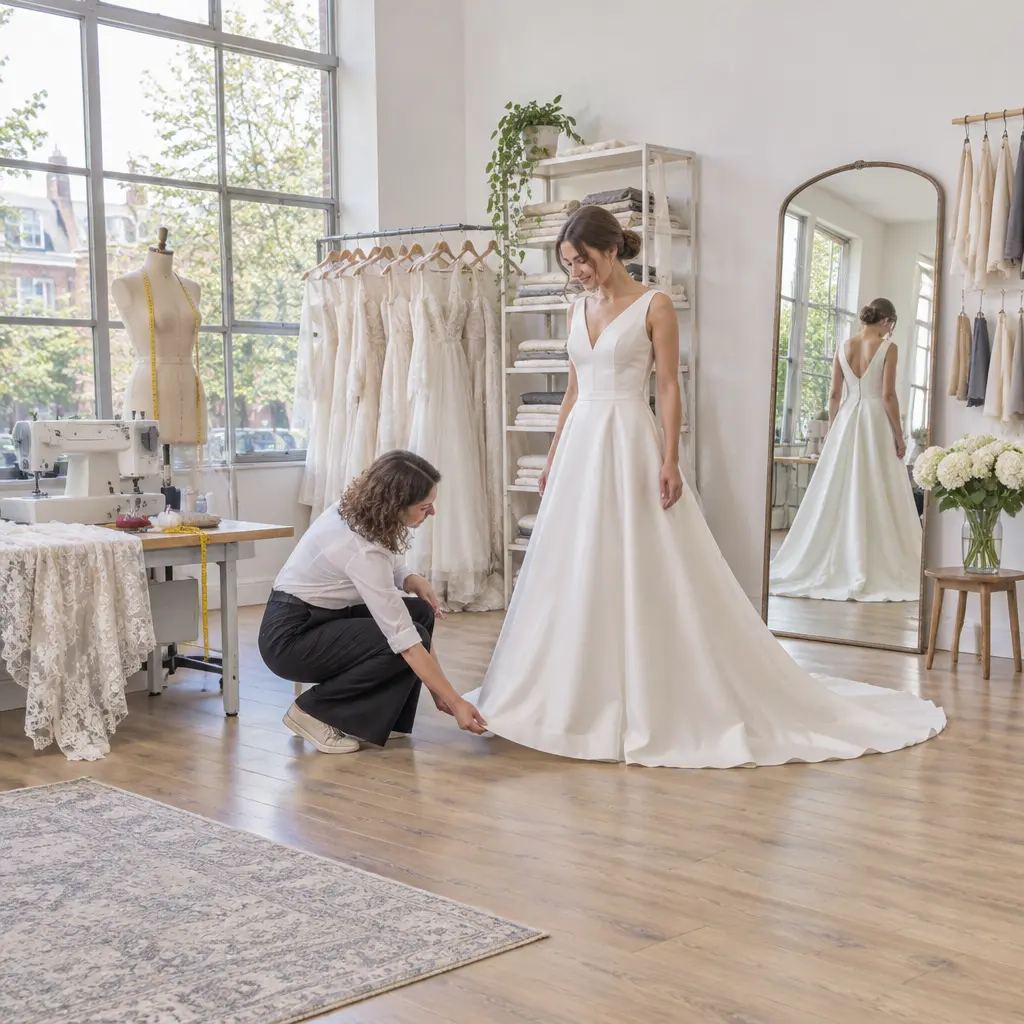
A bridal dress alteration timeline is the planned sequence of fittings and adjustments that takes a wedding gown from its current fit to a comfortable, finished fit for the wedding day. Bridal boutiques commonly recommend beginning alterations about two to three months before the wedding, while some advise allowing three to four months, especially for complex changes or busy seasons. Because each dress, seamstress, and schedule is different, the safest approach is to book a specialist early, confirm the final fitting date, and leave a buffer for any unexpected changes. This guide explains how to plan the timeline, what happens at each fitting, which factors can extend the process, and how to avoid last-minute stress.
Bridal gown alterations shape a realistic wedding-dress timeline
Alterations are the garment adjustments made to improve a dress’s fit, comfort, movement, or appearance. The Association of Sewing and Design Professionals describes professional sewing and design work as a specialized service requiring technical garment knowledge; in practice, bridal alterations often involve several interdependent tasks rather than one simple fitting. A hem change, for example, may need to be coordinated with the shoes, while taking in a bodice can affect its neckline, zipper, or embellishment placement.
A common planning range is to start alterations roughly 8–12 weeks before the wedding, with earlier booking for intricate gowns, extensive redesigns, or high-demand seasons. Bridal retailer David’s Bridal advises allowing about two to three months for alterations, while wedding-planning guidance from The Knot also emphasizes scheduling well ahead of the event. These are planning benchmarks, not guarantees: a seamstress’s workload, the gown’s construction, and the number of required fittings all influence the actual schedule.
Routine fit adjustments
Routine adjustments address fit without substantially changing the gown’s design. Common examples include shortening a hem, adjusting straps, taking in or letting out seams where fabric allows, and refining the bodice. The work may be relatively straightforward, but it still depends on accurate measurements and the shoes and undergarments the bride plans to wear. Bring those items to fittings so the dress is assessed at the intended height and with the intended support.
Complex construction changes
Complex alterations change or rebuild parts of the dress, such as reshaping a neckline, adding sleeves, changing a train, altering a heavily beaded bodice, or modifying a corset. These tasks can require more labor and additional fittings because decorative details, lining, structure, and fabric layers must be handled together. Ask the specialist to assess the gown before setting a firm completion date; an online estimate cannot account for every construction detail.
A timeline is a planning guide, not a universal rule
The timeline should be based on the gown and the tailor’s availability, rather than on a single standard number of weeks. A simple hem may need less work than a layered, lace-covered skirt, while a gown ordered close to the wedding may leave fewer scheduling options. Treat the recommended start window as a minimum planning prompt, then ask for a written schedule with fitting and pickup dates.
Bridal alteration stages determine when each fitting should happen
A fitting is an appointment in which the specialist checks the garment on the wearer, pins or marks adjustments, and confirms how the dress moves. Many alteration plans include two or three fittings, though a more involved gown may need additional appointments. The best schedule works backward from the wedding and reserves time after the final fitting for pressing, collection, and a last try-on.
Initial consultation and first fitting
The initial appointment establishes the gown’s condition, desired changes, and likely work plan. Bring the shoes, undergarments, and accessories intended for the wedding, and explain whether the dress needs to accommodate a bustle or particular movement. The specialist can then pin the fit, discuss construction limits, estimate the number of fittings, and identify any decisions that must be made before work begins.
Second fitting and movement check
A second fitting checks the changes made after the first appointment and reveals whether the dress remains comfortable when standing, sitting, walking, and raising the arms. This matters because a gown can look smooth while stationary but pull, slip, or restrict movement in use. If something feels uncomfortable, say so during the fitting; small corrections are easier to address before finishing details are completed.
Final fitting, pickup, and buffer
The final fitting confirms the intended fit and checks functional details such as the hem, closures, straps, and bustle. Schedule it with enough time to resolve any remaining issue rather than placing it immediately before the wedding. Confirm when the gown will be ready for pickup and ask how it should be stored and transported. A buffer of at least a week is a useful planning safeguard when appointments and travel allow, though the specialist’s recommendations should guide the exact date.
Alteration timing depends on gown, body, and calendar factors
The amount of work is only one part of the schedule. Fabric, embellishment, garment structure, body changes, travel, and the specialist’s appointment calendar can all affect how early alterations should begin. Discuss these factors at the first consultation so the timeline reflects the actual dress rather than a generic checklist.
Fabric, layers, and embellishments
A dress with multiple skirt layers, delicate lace, sequins, beadwork, or internal boning may take longer to adjust than a simpler design. The specialist may need to remove and reapply decorative elements or work through several layers to preserve the finish. Ask whether the planned alterations could affect beading, lace placement, or the shape of the train, and make sure those details are reflected in the estimate.
Weight or measurement changes
A substantial change in measurements between fittings can require a new assessment, particularly if the bodice or waist has already been shaped. Avoid making assumptions about how a dress will fit later; instead, tell the tailor about relevant changes and ask when measurements should be rechecked. Do not delay the first fitting while waiting for a particular body change, since early consultation can preserve more options.
Peak-season demand and location
Appointment availability can be limited during busy wedding periods, and local demand varies. A bride relying on a specialist near the wedding venue may also need to coordinate travel, gown transport, and pickup. Book the seamstress as soon as the dress is available, especially if the wedding falls in a popular season, and confirm whether the specialist will be available for all planned fittings.
Early booking and clear communication prevent last-minute panic
The most reliable way to reduce deadline pressure is to turn the alteration plan into dated appointments and clear responsibilities. Wedding-industry timelines often recommend beginning dress alterations months before the event because fitting work takes place alongside many other wedding preparations. There is no single industry-wide statistic that predicts how long every gown will take, so individualized planning and a realistic buffer are more useful than relying on a fixed promise.
Create a backward schedule
Start with the wedding date and work backward from the day the dress must be packed or transported. Set a target for final fitting, reserve the preceding fitting appointments, and book the initial consultation as early as possible. A simple planning chart can help:
- About 8–12 weeks before the wedding: begin alterations or follow the specialist’s earlier recommendation.
- Several weeks before the wedding: attend follow-up fittings and confirm the fit while wearing the planned shoes and undergarments.
- At least a week before travel or the event, when practical: complete the final check, collect the gown, and verify storage and transport instructions.
These are flexible milestones, not guarantees. If the dress needs significant restructuring, begin sooner and follow the tailor’s proposed schedule.
Confirm scope, price, and appointments in writing
Before work begins, ask what the quoted price includes, which changes are planned, how many fittings are expected, and when the gown will be ready. Clarify the process for additional work if the fit changes or a detail needs revision. Keeping appointment dates and agreed changes in writing helps prevent misunderstandings and makes it easier to spot schedule conflicts early.
Bring the full wedding-day outfit to fittings
Shoes influence hem length, while undergarments can affect the gown’s shape and support. Bring both to every fitting, along with any accessories that affect how the dress sits. If the dress has a bustle, practice fastening it with the person who will help on the wedding day; a quick demonstration can prevent confusion after the ceremony.
Act quickly if the schedule slips
If an appointment is postponed or a fit concern appears, contact the specialist promptly rather than waiting for the next planned visit. Ask what work can be completed safely within the remaining time and avoid adding nonessential design changes late in the process. For example, a bride whose gown arrives later than expected can prioritize fit, hem, and secure closures before considering optional decorative revisions.
A calm alteration timeline protects fit, comfort, and the wedding-day plan
Bridal dress alterations are best treated as a sequence: book an experienced specialist early, assess the gown’s construction, attend scheduled fittings with the complete outfit, and leave time for final checks and pickup. Routine adjustments may be simple, while layered or embellished gowns and major design changes can call for earlier planning and more appointments. Since workload and garment needs differ, the specialist’s assessment should determine the exact timeline.
To avoid last-minute panic, contact an alteration professional as soon as your dress is available, request a dated plan, and keep a practical buffer before the wedding. For further preparation, review your boutique’s care guidance and ask your seamstress for written instructions on gown storage, transport, and bustle use.
Sources: David’s Bridal, Wedding Dress Alterations, https://www.davidsbridal.com/blogs/bride-blog/wedding-dress-alterations; The Knot, Wedding Dress Alterations: The Ultimate Guide, https://www.theknot.com/content/wedding-dress-alterations; Association of Sewing and Design Professionals, About ASDP, https://www.sewingprofessionals.org/